The Problem
Women are not being taken care of by the U.S. health system.
Women’s pain is too often ignored or overlooked, and research on women-specific conditions is underfunded and years behind. This is the reality that women face every day when trying to access preventative and life-saving medical care.
A local health system and IDEO tackled this challenge, and asked a big question together:
How might we reimagine the health experience to seamlessly integrate care across touchpoints, systems, and the lived experience of women?
As service designer, research partner, and lead interaction designer, I helped shape a future-state vision grounded in research with patients, caregivers, providers, and staff across every life stage, from adolescence through breast cancer. That research became a new model of care built on better navigation, trusted support, and handoffs that don’t drop people.
The Process
You can’t design for women’s health by only looking at service lines and clinical workflows. You have to start with women’s actual lives.
We paired interviews with diary studies, analogous research, and journey mapping across patients, caregivers, providers, and staff, to understand what care feels like before and after a visit, not just inside it.
Women’s Stories
Women consistently described their in-clinic care as warm and high quality. The hardest moments happened in the transitions: referrals that disappeared, care that stopped the moment they left the building, having to explain themselves all over again.
To map that gap, we built six end-to-end journeys, from establishing care through pregnancy, postpartum, perimenopause, breast cancer, and older adulthood, separating table-stakes fixes from real transformation. The needs that mattered most weren’t tied to one condition; they repeated across every stage: clearer guidance, better handoffs, more continuity. You can see one of these journeys mapped in full above, linked under each woman’s story.
The care itself was good. It was the space between the care that kept failing them.
The Solution
That gap between excellent care and a fragmented overall experience became the core design opportunity. We translated it into Cottage Garden, a future-state ecosystem, and a set of signature concepts that addressed the patterns we saw in research.
I designed all three signature concepts below end-to-end, including the True North timeline, while the broader team led strategy and research synthesis alongside me.
Signature Concepts
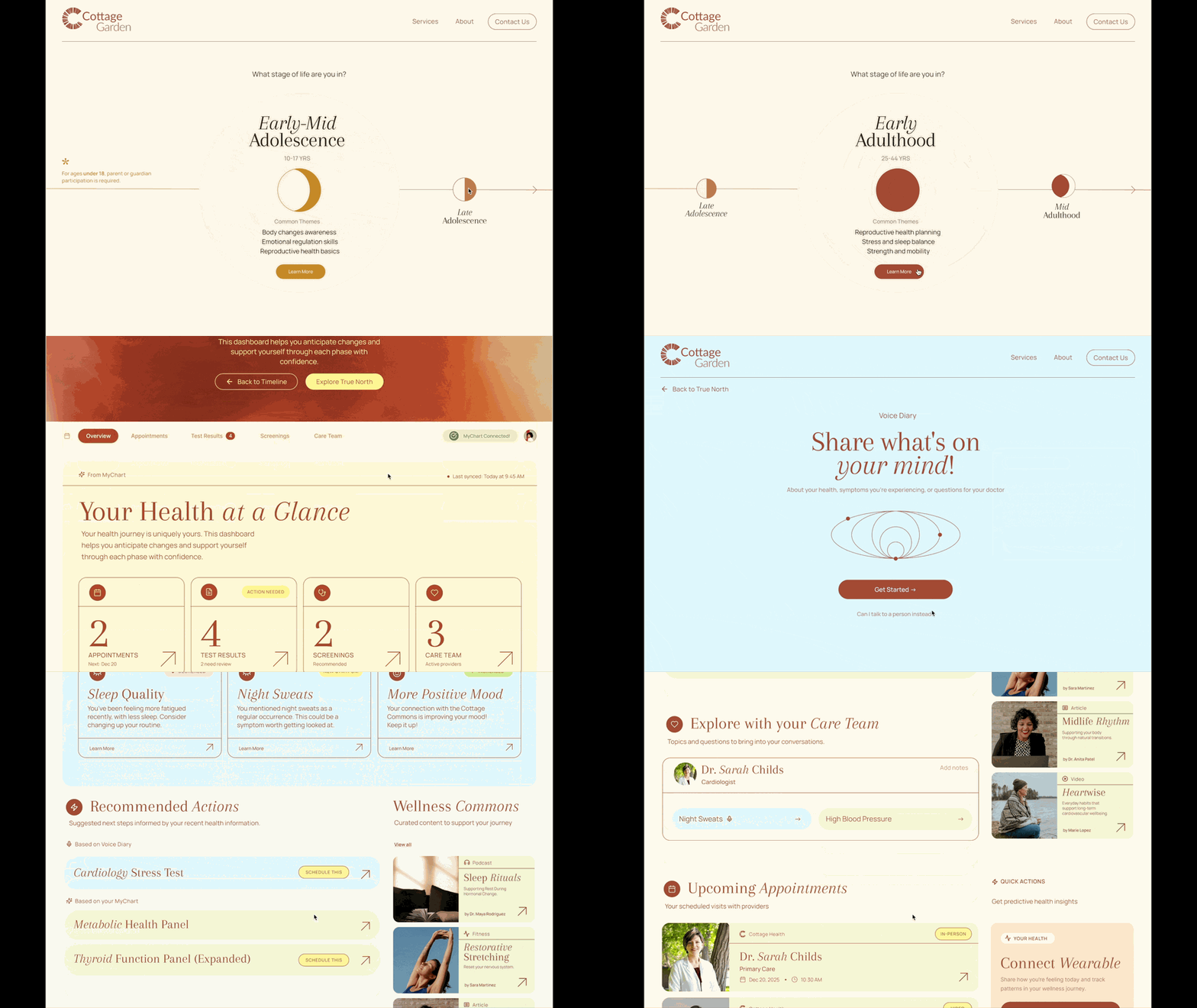
True North: helping women see the long view
Women told us they want continuous guidance and foresight across life’s transitions, rather than having insurance dictate which tests and screenings they receive, or discovering life stages only once they’re already in them.
True North helps women see the long view of their health journey: a dynamic timeline bringing together their data, priorities, and reflections to share with providers. It links MyChart and wearable data to stage-smart, clinically backed guidance, and includes an AI-powered voice diary that turns women’s own reflections into recommendations for their next appointment.
Wellness Commons: a front door to holistic support
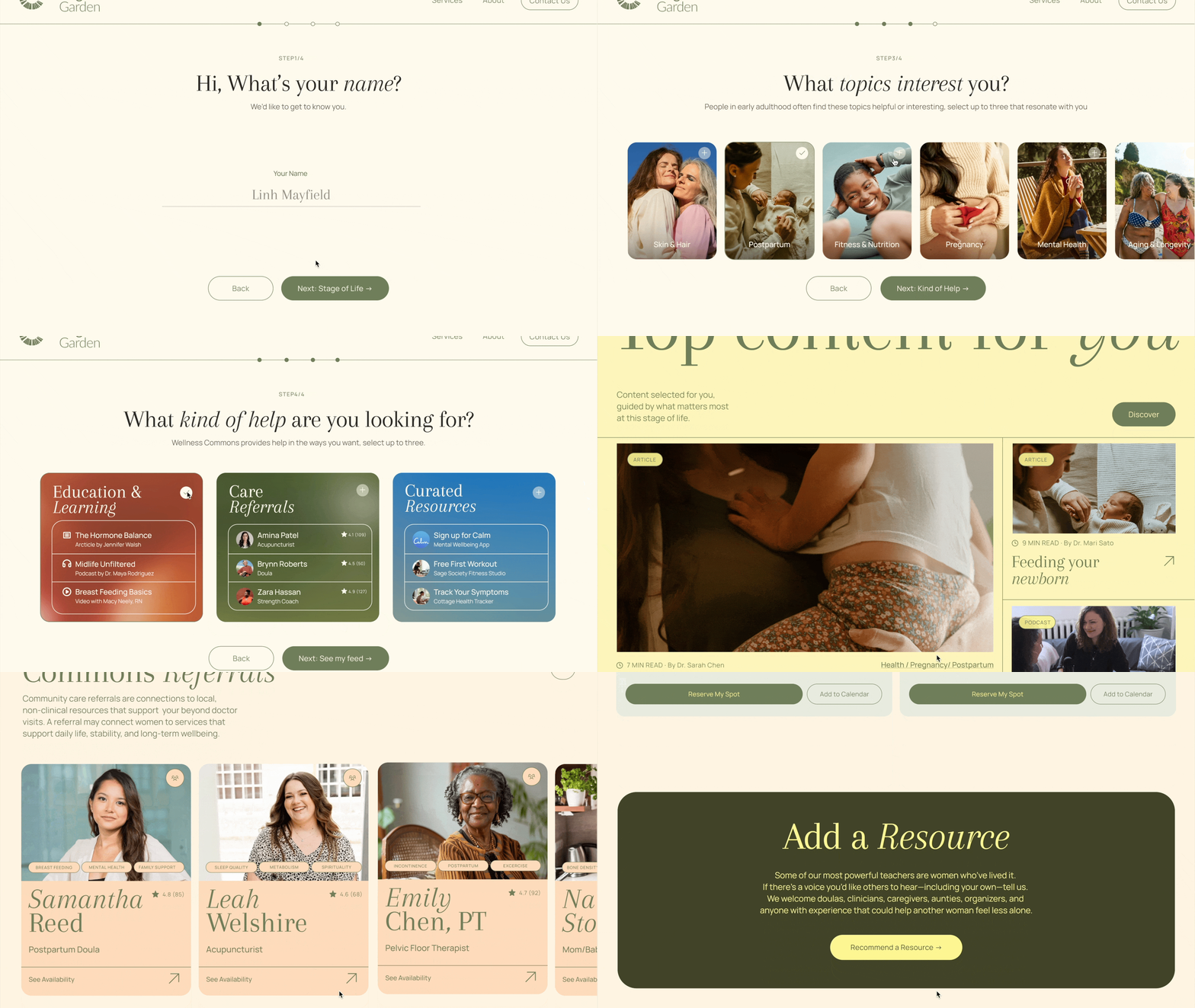
Women told us they want access to holistic care and trusted answers to their health questions, instead of turning to social media, Google, or ChatGPT.
Wellness Commons is a library of resources for a woman’s health needs or life stage, vetted by the health system and delivered as articles, classes, and podcasts. It connects women to trusted referrals for acupuncture and other holistic care the system doesn’t offer in-house, and uses the system’s scale to subsidize things like meditation apps or strength training memberships, so wellbeing isn’t just for people who can afford concierge medicine.
Care Circle: right-sized support around the woman
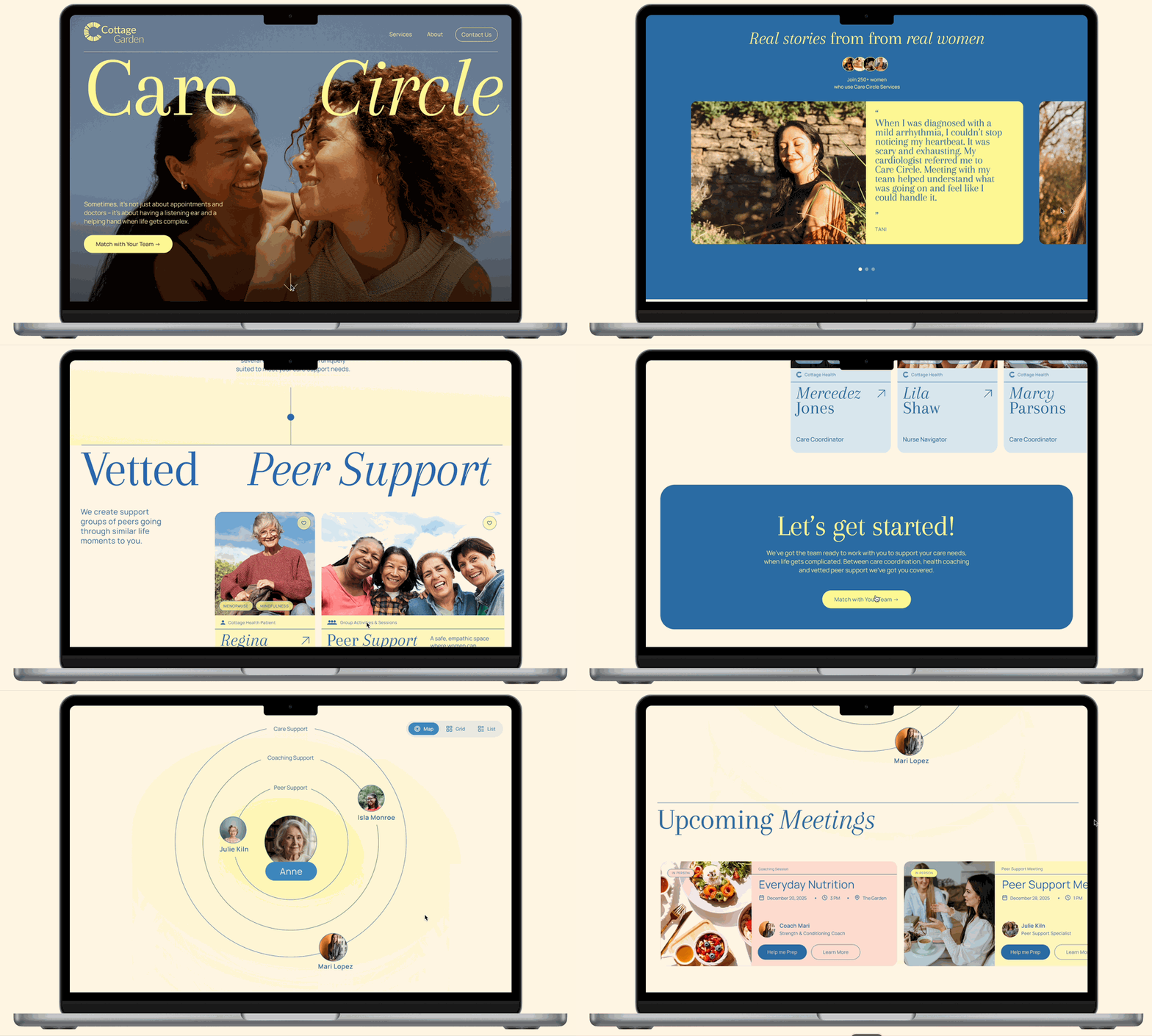
Women told us they wanted right-sized support for different life stages. We first designed 1:1 nurse navigation for every woman, but the health system couldn’t sustainably fund a navigator per patient at that scale. Care Circle rebuilt it as a tiered model instead: 1:1 navigation for the women who need it most, with lighter peer and community support layered in for everyone else.
Care Circle assembles an extended support network, connecting women to a care support team and a navigator when needed, delivering tailored support that meets each woman’s specific needs. Anyone who needs help navigating their care has an option that best suits them.
Wrap Up
I love working with and for women. I sat in their living rooms hearing about everything from a church meal train to a lifelong battle with endometriosis.
Women are the glue of a community, so women’s health is community health. Since this work wrapped, the client named a new lead for their women’s health program and launched a public fundraising push to bring it to life. I hope they keep women at the center of what they build next.